
Clear Aligners or Braces: Orthodontist or Dentist, and Where the Price Gap Comes From

The waiting room is in an old terrace in inner Brisbane, the kind with pressed-metal ceilings and a fiddle-leaf fig that someone clearly waters with care. She is in her thirties, sitting on a timber bench with two pieces of paper on her knee. One is a quote from this practice for clear aligners, and the total took her breath away when she first read it in the car park. The other is a printout from a company online, offering aligners by post for a great deal less. Somewhere between the two, a friend has told her, sit ordinary braces. She has not smiled with her teeth in a photo for years. She is not vain about it, she says, she is just tired of thinking about it. What she wants to know is why the same idea, straighter teeth, can come with such different prices, and which of the differences actually matter. The answer, it turns out, has less to do with the plastic than with who is watching the teeth move.
Aligners and braces: what each does well
Clear aligners and braces are two ways of doing the same basic job. Both apply steady pressure to move teeth into a new position over time. They go about it differently, and that difference shapes who each one suits.
Braces are fixed to the teeth. Brackets are bonded on and connected by a wire that the clinician adjusts at review appointments. Because they stay in all the time, they do not depend on the patient remembering to wear them. They are more visible, although there are less noticeable versions.
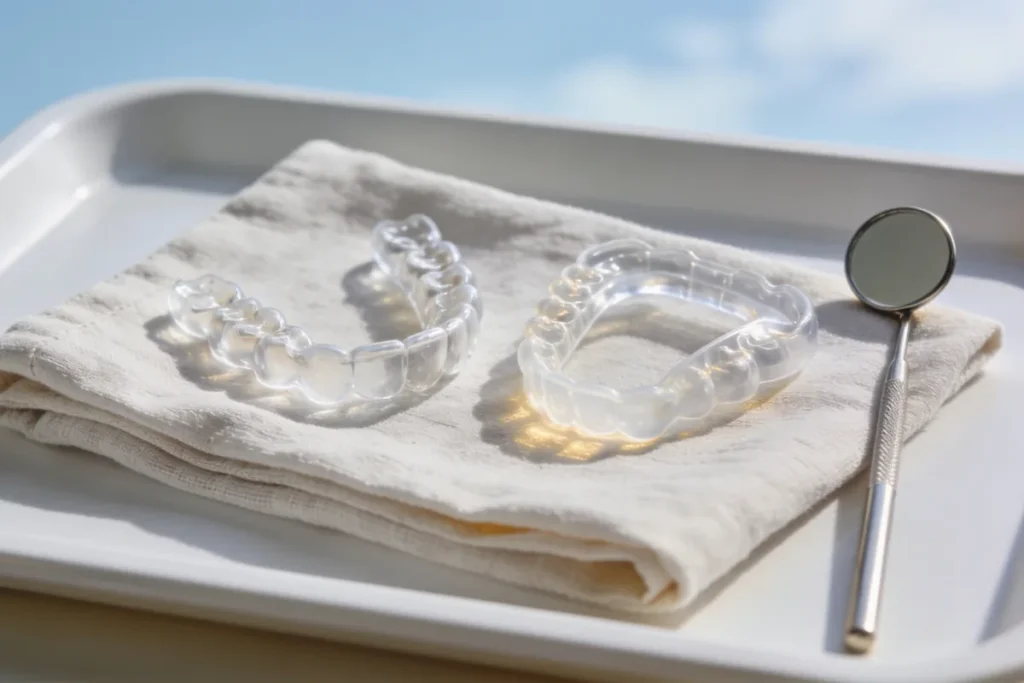
Clear aligners, of which Invisalign is the best-known brand, are a series of removable plastic trays, each one shaped slightly differently from the last. You swap to the next set on a schedule your clinician sets. They are harder to spot, and you take them out to eat and to clean your teeth. That freedom comes with a responsibility: aligners only work if they are worn for the hours prescribed. An aligner sitting in its case on the bedside table is not moving anything.
The complexity of the case matters too. Some tooth movements are more straightforward than others, and some bites involve the jaw as well as the teeth. Whether aligners, braces or something else is the right choice for a particular mouth is a clinical decision, and it is made at an examination, not on a website.
Sometimes that examination turns up something beyond the teeth themselves, and a dentist may suggest seeing another kind of practitioner alongside the dental treatment. The allied health listings are there if that happens, though for most people the conversation stays in the dental chair.
Specialist orthodontist or general dentist
The first of the three questions is who is treating you. Two kinds of practitioner commonly provide aligners and braces in Australia, and the difference between them is a matter of registration.
A specialist orthodontist is a dentist who holds specialist registration in orthodontics. The Dental Board of Australia explains that specialist registration requires a qualification in the specialty, on top of general registration, and at least two years of general dental practice. Orthodontics is one of 13 dental specialties the Board recognises.
A general dentist may also provide clear aligners. That is lawful, and many general dentists do it. What they do not have is specialist registration in orthodontics, and the experience and case numbers behind their aligner work can vary a great deal from one practice to the next.
You can check which kind of practitioner you are seeing. The Ahpra register of practitioners is public, and according to the Dental Board, it shows any specialist registration a dentist holds. Search the practitioner’s name. If they are a specialist orthodontist, you should see specialist registration in orthodontics listed against them.
If the person treating you is a general dentist, that is not a reason to walk out. It is a reason to ask more questions. How many aligner cases have they treated? What training have they done in this kind of treatment? What happens if the case turns out to be more complex than expected: would they refer you to a specialist? A confident practitioner will answer those questions without fuss.
It also helps to ask who, exactly, you will see at each appointment. In some practices the person who plans the treatment is not the person who checks on it at every review. That can work perfectly well, but you should know whose name is on the plan, whose registration you are relying on, and who makes the call if something needs to change. Write the name down and check it on the register, the same way you would for the first practitioner you met.
When you are looking for a practice to visit, the dentist and orthodontist listings are a starting point, and once you have a name, the register check takes only a minute.
What the quote should include
The second question is what the price actually covers. Two quotes for the “same” treatment can be quoting for quite different things, and the gap between them often lives in the lines that are not written down.
Back on the bench in Brisbane, the woman with the two quotes went through them line by line. This is the list she ended up working from:
- Records. Scans, x-rays and photographs taken before treatment starts. Are they included, or charged separately?
- The appliances. How many aligners are planned, or what kind of brackets?
- Refinements. With aligners, a case does not always finish exactly as planned on the first series. Extra aligners to fine-tune the result are called refinements. Are any included, and how many?
- Review visits. How many in-person appointments are part of the price, and how often?
- Retainers. After treatment, teeth need to be held in their new position. Is a retainer included, is it fixed or removable, and what does a replacement cost?
- Emergency visits. If a bracket comes loose or an aligner cracks, is the appointment covered?
- Payment plan. If you pay over time, what are the terms?
- Running long. If treatment takes longer than planned, is there an extra charge?
Once those lines were filled in, the two quotes looked less like a high price and a low one. They looked like two different amounts of care. One included records, several reviews, refinements and retainers. The other included the aligners and not much else.
That is not to say the higher quote was automatically the right one. But it is very hard to compare two prices until you know what each one buys. If a line is missing from a quote, ask for it in writing, and ask the other practice the same question so the answers can sit side by side. Retainers deserve a special mention here, because they are easy to forget while you are focused on the treatment itself. A retainer is part of keeping the result, so ask how long you will be expected to wear one, and what it will cost to replace if it is lost or broken. The answers are rarely on the first page of the quote.
Mail-order and remote aligners
The printout in her bag was from a company that sells aligners remotely. You take an impression or scan, a treatment plan is drawn up, and the aligners arrive by post. Some offers include video check-ins or photos sent through an app.
The thing missing from most of these arrangements is the third question: how often does someone examine your mouth in person? Teeth do not always move exactly the way a plan predicts, and some of what a clinician watches for during treatment is easiest to check with the patient in the chair. Supervision is the part a cheaper offer is most likely to drop, and it is the part that is hardest to see on a price list.
If you are considering any remote provider, ask three things before you pay:
- Who is the treating dentist for my case?
- Are they registered, and can I check their registration?
- When, and how often, will they examine me in person?
If the answers are vague, or there is no in-person examination at all, think carefully about what you are paying for.
It is also worth asking what happens if something goes wrong partway through. If an aligner stops fitting, or a tooth starts to feel different, who do you call, and can they see you? If the treatment does not produce the result you expected, what are your options, and who pays for any further work? A local practice that has examined you can usually answer those questions in concrete terms, because it is the place you would go back to. A remote provider may need to send you to someone else, and you will want to know who that is before you start rather than after.
None of this means every remote offer is a bad one, or that every in-person practice gets it right. It means supervision is a line item, even when it does not appear on the quote, and it belongs in the comparison.
Health fund extras
If you have private health insurance with extras cover, it may help with the cost, but how much depends on your policy.
Orthodontics usually sits under major dental, with its own limit and its own waiting period. The details vary between funds and between policies, so the place to start is your Private Health Information Statement, which sets out what your cover includes.
Then ask the practice for the item numbers for your proposed treatment. With those, you can ask your fund for a quote on what it will pay. Ask the fund, too, whether the limit is per year or over the life of the policy, whether the waiting period has been served on your current cover, and whether changing policies would reset it. A benefit you have not waited long enough to claim is not much help to this year’s treatment.
If treatment is for a teenager rather than an adult, the same questions apply, and it is worth asking them early. Families sometimes find out about a waiting period only once the treatment plan is on the table. If you are weighing up cover in the first place, the insurance listings include businesses that can talk you through the options.
Ask Who, What and How Often
Who is treating you, and what registration do they hold? What does the quote include, from records to retainers? And how often will someone examine your teeth in person? Those three questions explain most of the gap between one aligner quote and another. The woman in the waiting room did not choose on price in the end. She chose the practitioner who answered all three without hesitating, and she checked the registration on her phone before she left the car park. Your own choice will depend on your teeth and your circumstances, and suitability for any treatment is decided at an examination by a registered practitioner.
This article is general information only. It is not dental advice.
Sources: Dental Board of Australia, Specialist registration (https://www.dentalboard.gov.au/Registration/Specialist-Registration.aspx)