
Booking a Makeup Artist for a Formal or Wedding: The Trial, the Travel Fee and the Kit
It’s the week before the formal, and your daughter is standing at the bedroom mirror with her phone in one hand, scrolling through photos of the look she wants. The dress is hanging on the wardrobe door. The shoes are sorted. And the makeup artist she’s had her heart set on has been booked out since winter. I’ve seen this exact scene play out more than once, and it’s never anyone’s fault, exactly. It’s just that the time to book was back in August, when November felt a long way off. Whether you’re organising a Year 12 formal or a wedding party with four bridesmaids and two mums, the booking itself is the easy part. What takes a little more care is understanding the trial, reading the quote with its extra fees, and knowing what a clean kit should look like when the artist unpacks it in your lounge room.
Book early, and what “booked out” means
Formal season peaks around November, and spring is a busy time for weddings too. A good makeup artist can only be in one place at a time, and on a Saturday in November, most of them already know where that place is.
“Booked out” usually means the artist’s morning is full, not their whole day. For a group, though, a morning is what you need. If you’ve got a bride, four bridesmaids and both mothers to get ready, that’s a long stretch of time in the chair, and the artist may need a second artist or a very early start to get everyone done before the photographer arrives. Ask how they handle groups, how many faces they can do in a morning, and what time they’d need to start. If the date is fixed and you’re still deciding between artists, ask whether they can pencil you in for a day or two while you think, rather than losing the date.
When you’re ready to look, the makeup artist listings are a good place to begin. If hair is being done the same morning, it’s worth finding a hair stylist at the same time, so the two can plan the timing together rather than both arriving at seven.
The trial: what it is for
Most of the important decisions get made at the trial, so it’s worth booking it for a day when you’re not rushed.

The first thing a trial settles is the look itself. Bring a few reference photos of makeup you like, and a photo or a swatch of the outfit colour. Many people find that makeup for an event needs to be a little stronger than everyday makeup to show up in photos while still looking natural in person, and the trial is where you find that balance with the artist.
It’s also a test of how the makeup lasts. If you can, wear it for the rest of the day afterwards. See how it holds up at lunchtime and again in the evening. Take photos in daylight near a window, and a few with the flash on, because makeup that looks lovely in one can look quite different in the other.
The trial is your chance to find out how your skin reacts, too. More on that below.
And it’s where you work out the timing. How long does your face take? How long will the whole group take? That number shapes the schedule for the whole morning.
One small but important thing: a trial with one artist doesn’t guarantee the same artist on the day, especially with larger businesses that have a team. If you want a particular person, confirm their name in writing.
Reading the quote
Makeup quotes often come with several extra lines, and that’s normal. What matters is that each one is written down, so nothing comes as a surprise.
Here are the items you’re likely to see:
- a per-face price for each person being made up
- a trial fee, and whether it’s taken off the final total
- an early-start fee, for appointments before a certain time
- a travel fee, if the artist comes to you
- lashes, if they’re not included
- a touch-up kit to keep for the day
- waiting time, if the artist has to stay on for touch-ups or the schedule runs late
- a group minimum, especially on peak dates
None of these is unusual. Some artists include a few of them in the per-face price and some list them separately. Ask for every add-on in writing before you pay a deposit, so you’re comparing like with like if you’re talking to more than one artist.
When I worked on a front desk, the bills people queried were almost never the big ones. They were the small extras nobody had mentioned, added up at the end. A makeup quote works the same way. If the travel fee depends on distance, ask for it worked out for your address. If there’s an early-start fee, ask what time it kicks in, because a six o’clock start for a big group may push the first face well before that. And if you’re paying for lashes or a touch-up kit, ask what’s in it, so you know whether you still need to buy anything yourself.
Allergies and skin
Tell the artist about any sensitivities, allergies or skin conditions before the trial, not on the morning. If you or anyone in the group has a history of reacting to cosmetics, ask about a patch test with the products they plan to use.
It’s also worth asking the artist what they’ll be using, especially for anything that sits near the eyes. If you know you react to a particular ingredient, check the ingredient list on the product. A good artist won’t mind you asking, and many will have alternatives in their kit for sensitive skin.
For a group booking, it helps to collect this information from everyone before the day and send it to the artist in one message. Teenagers getting ready for a formal don’t always think to mention the eye cream that made them itchy last year, and a mum might not bring up a skin condition unless someone asks. A quick note to the group a week or two ahead saves an awkward conversation at the dressing table.
The trial is the best time to find out how your skin responds. A reaction a week before the wedding is a nuisance. On the day itself, it’s a much bigger problem.
What a clean kit looks like
There’s no specific law that sets out how a makeup artist keeps their kit clean, but there’s a well-established set of habits in the industry, and you can usually see them at work.
Brushes should be clean and cleaned between clients. With a group, an artist might bring several sets, or clean brushes as they go.
Disposable mascara wands and lip applicators are widely used, so the same wand isn’t going from one person’s eyes to the next.
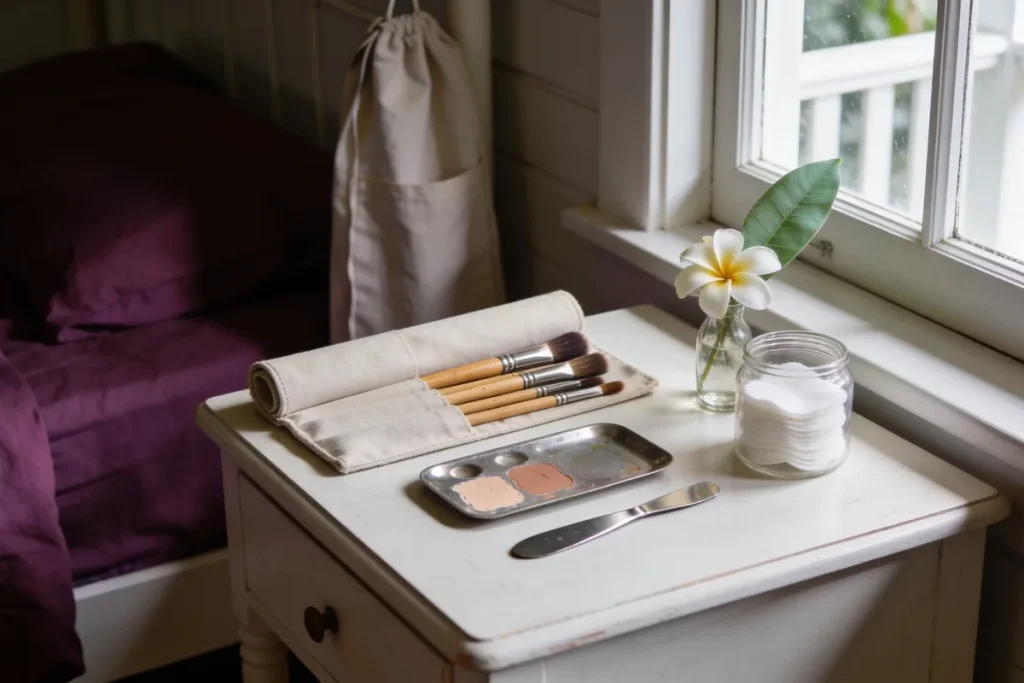
Products like foundation and lipstick are often taken out with a clean spatula and put onto a palette, rather than going straight from the tube or the bullet onto a face.
Hands should be washed or sanitised before the artist starts, and again between people.
These are practices rather than rules, and every artist will have their own way of doing things. But if a kit looks grubby, or the same brush moves from face to face without a clean, it’s fine to ask about it. It’s your face, after all.
Deposit, cancellation and the day itself
Most artists will ask for a deposit to hold the date. Before you pay, check how much it is and whether it comes off the final total.
Then talk about the things nobody likes to think about. What happens if you need to cancel? What happens if the artist cancels? What if the artist is sick on the morning: do they have a backup artist they can send? And what if you or the group run late: is there a cost for waiting, or a point at which the booking is shortened? It’s much easier to agree on these while everyone’s relaxed than to sort them out on the day.
Even when the terms are clear, the ACCC explains that consumer guarantees apply to services. One of those guarantees is that a service is provided with due care and skill. A written agreement sits alongside those guarantees and doesn’t replace them.
If you’re planning a wedding, the same approach works for your other suppliers. The wedding service listings can help you find the rest of the team, and it’s worth asking each of them the same questions about deposits and cancellations.
Write the Day Down
Before you pay a deposit, get the important things in writing: the artist’s name, the start time, the number of faces, every fee, and what happens if anyone cancels. Do the trial, take photos in daylight and with the flash, and tell the artist about your skin. On the morning, watch how they work with their kit. With all that sorted, the morning of the formal or the wedding can be about the dress and the photos.
Sources: ACCC, Consumer rights and guarantees (https://www.accc.gov.au/consumers/buying-products-and-services/consumer-rights-and-guarantees)